
Our Garden Trainee Mattie O’Callaghan writes this week on their time creating a RHS Gold Winning border at RHS Sandringham Flower Show 2026.

Structure in the winter garden
POSTED 21st January 2021

When the garden is stripped back in winter, with very little foliage and flowers present, skeletal plant structures and seedheads provide welcome interest.
As herbaceous plants run out of steam in autumn and retreat back to the crown (base of the plant) to wait out the winter, the skeletal remains of plants that are left behind can be equally as beautiful, if not more so, than when the plant is in flower.
Some plants however refuse to die gracefully and are best cut down to the ground as soon as they start to die back.
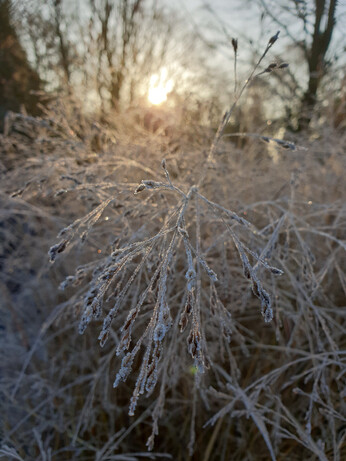
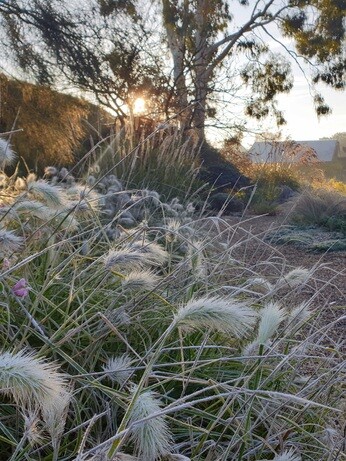
In the garden, we leave as much of the structure standing over winter, only cutting down spent stems when they are no longer standing upright, or when they start to disintegrate making a mess of the garden. We are rewarded when we spot small birds feeding on the seed heads, or when a frost coats the decaying stems, giving them a new lease of life, if only for a few hours.
Plants which stand up well to winter weather:
Agastache - relatives of sage and mint. Foliage very aromatic when crushed, hence the common names of anise hyssop and Korean mint. Flowers attractive to wildlife and their effect is enhanced by coloured calyces.

Betonica (syn. stachys) - a relatively new genus, which was previously part of stachys. As with most members of the mint family, the tubular, two-lipped flowers are designed to restrict access to the nectar by specific groups/sizes of pollinators. Those of the betonies attract primarily honeybees and small bumblebees.

Cephalaria - scabious-like flowers, yellow, white to lilac, with four petals, clustered together en-masse. Often divided opposite foliage. From open areas. One of the most attractive plants to bumblebees, honeybees, solitary bees and hoverflies, as well as a range of midsummer butterflies.

Echinacea - clump-forming, summer flowering perennials. Traditionally colours of pink, purple and white were prominent, but the use of the yellow flowered Echinacea paradoxa has encouraged a greater range of colours in new hybrids. As with others in the Asteraceae family, it's the ray-florets which are most interesting, but the disc-florets in the centre are also prominent and remain strong and prickly, after the colour has faded.

Hylotelephium (syn. sedum) - happiest on a free draining soil, where they make compact, free-flowering plants. Colours range from white through to pinks and reds. The autumn flowering provides a very valuable nectar source for butterflies.
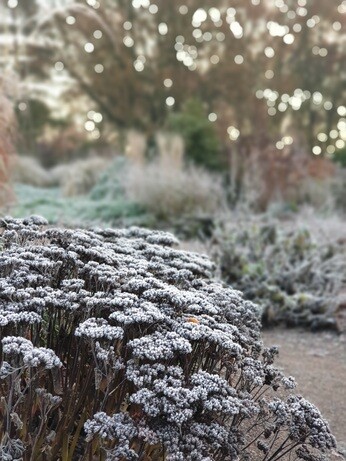
Phlomis - tolerant of poor, free-draining soils, but will extend into an average garden border. Most growing in full sun, but P. russeliana will take some shade. Foliage is aromatic and often attractive in its own right, with some looking silvery stachys-like. Flowers, yellow, pink or purple, in whorls on often vertical stems.

Rudbeckia - adaptable, showy yellow daisies all requiring full sun and a fertile, moisture retentive soil. All form controllable clumps and provide colour from mid summer well into autumn. Lovely with grasses such as molinia.

Verbena- A large genus of South American plants, generally for warmer soil. Verbenas collectively are one of the most important garden plant genera for supporting nectar-feeding insects, from midsummer until the depths of autumn.

Vernonia- a valuable late flowering perennial with purple-pink flowers that are held on top of head-high, upright stems. Grown in a rich, fertile soil in full sun/part shade.
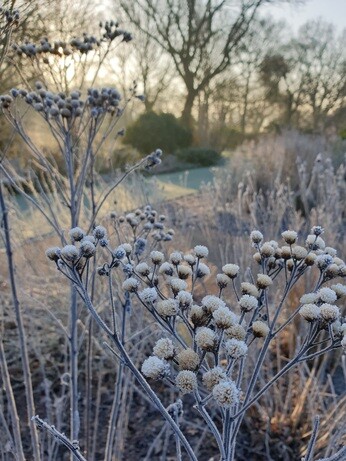
Grasses
Calamagrostis - In the realms of grasses, the majority of cultivated Calamagrostis produce a strong upright vertical, unlike most others. Suitable for the dry garden or in a border to contrast against the more rounded outlines. Flower spikes tend to be equally narrow, but en-masse still provide a good effect.

Eragrostis - many branched flowers, similar in effect to deschampsia. Another large and widespread grass group, with most in cultivation preferring a warmer situation. The latin name may be derived from eros-love and agrostis-grass, hence the common name love grass.
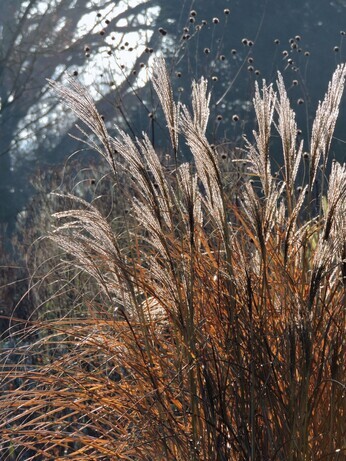
Miscanthus - with imposing columns of arching ribbon-like leaves, many varieties also have excellent autumn foliage colour, varying from orange to pink. Large feathery plumes add an element of drama to the garden, catching the wind and the low winter sun. Happiest in a rich soil in full sun.
Pennisetum - fountain grasses are very well named, with masses of flowers, flowing from clumps of mounded foliage. The flower spikes can be coloured, white-cream to red, with conspicuous bristles, hence the latin name Pennisetum, penna meaning feather and seta, bristle-like.
Stipa - clump-forming grasses, deciduous or evergreen, wiry leaves and airy flower heads. Originating in arid areas, thus suited to open sites in the dry garden, with well drained soils. Too much fertility, or watering, may encourage too much lax growth. They are generally cool-season plants, coming into growth in the autumn and flowering late spring into summer.

The photography is excellent the frosts are lovely...